Once a Ewing fire is knocked down, the clock starts on soot acidity and on the wet framing the suppression water created. We clean soot by surface type — wet method, dry method, abrasive — because what works on tile fails on raw wood. Older Mercer County chimneys and flues channel heat and residue into walls the fire itself never reached. Each affected room is documented for char, smoke, and water separately, so the estimate matches the actual damage in each space. Reach us at 551-231-5461 as soon as the flames are out.
How A Fire Loss Spreads In Three Ways
A fire put out quickly still leaves the structure soaked, sooty, and saturated with odor. Smoke molecules bond to porous materials at the molecular level, which is why air freshener and ozone sprays only mask the odor until they fade.
We clean soot by surface type — wet method, dry method, abrasive — because what works on tile fails on raw wood. The whole extent — char, soot travel, and suppression water — is recorded and delivered as one organized packet for the adjuster.
What It Takes To Clear The Smell
Masking buys a few days; the smoke molecules in porous materials outlast any scent that covers them. We remove the source residue first, then use thermal fogging or hydroxyl treatment to neutralize what is bonded into porous materials.
We do not upsell a duct replacement the system does not need, and we do not skip one it does. We finish on odor, not on appearance, because appearance is the easy part of a fire loss.
What The Hoses Leave To Dry — Honestly
The fire department does its job well, and what it leaves behind is a soaked building that starts to mold if left wet. If the suppression water is not pulled quickly, the fire loss quietly becomes a mold loss on top of everything else.
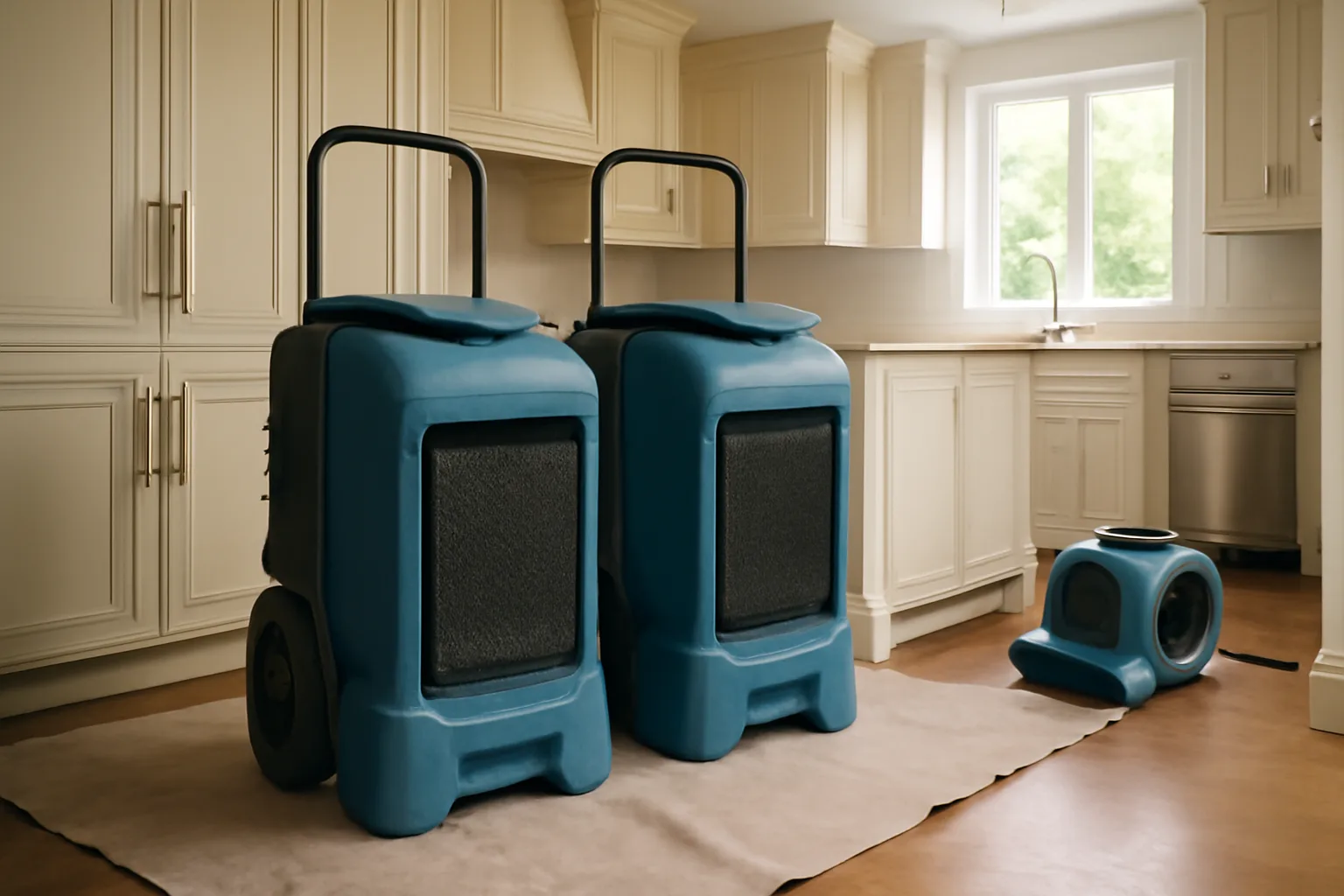
The team extracts first, dries the envelope on documented readings, and only then carries on with soot and odor work. We carry the water side through to verified-dry, so the rebuild sits on sound, dry framing instead of a hidden problem.
Putting out a house fire takes a great deal of water, and all of it ends up in the structure as a second loss. We carry the water side through to verified-dry, so the rebuild sits on sound, dry framing instead of a hidden problem. We stabilize the opening, extract the suppression water, and dry the framing on metered readings before it can colonize. The water carries soot deeper into porous materials, so leaving it in place spreads the contamination further.
Why Soot Keeps Damaging After The Fire — No Fluff
Smoke residue continues damaging a home long after the flames are out, etching and staining what it settles on. The etching is cumulative, so the response window decides how much of the home survives the smoke.
The team neutralizes the acidity and lifts the residue by the right method for each surface in the home. Getting on the residue early is the cheapest version of fire cleanup, and the version that saves the most.
Soot is acidic, and it keeps corroding metal, glass, grout, and finishes for as long as it sits uncleaned. A quick soot response is the difference between salvaging surfaces and rebuilding them. The team neutralizes the acidity and lifts the residue by the right method for each surface in the home. The acidity means a delay of days turns a cleaning job into a refinishing job on the same surfaces.
Why Pack-Out Protects The Claim — A Straight Answer
A complete fire response covers the contents, not just the rooms, because the smoke does not stop at the drywall. We photograph and catalog what can be saved and what cannot, so the contents claim is documented as clearly as the structure.
The inventory ties each item to its condition, so the adjuster can see exactly what the smoke and water reached. We return the cleaned contents once the structure is ready, closing the loss completely rather than partially.
A fire loss is not only about the structure — it is about everything inside it the smoke and water reached. That way the belongings side of the claim is as clean and documented as the building side, with no loose ends. The inventory ties each item to its condition, so the adjuster can see exactly what the smoke and water reached. We photograph and catalog what can be saved and what cannot, so the contents claim is documented as clearly as the structure.
A single contract for the work
In {city}, one kind of damage rarely shows up alone — fire damage restoration often overlaps with burst pipe response, wind damage repair, mold cleanup, Category-3 water cleanup, structural rebuild, and our crew manages the whole loss as one job. That standard travels with us to and everywhere else across Mercer County.
If you searched for local emergency restoration, Either way, you reach a live dispatcher, not a queue, and you are already ahead of the damage. Call 551-231-5461 any hour, read What Drives How Long a Ewing Home Takes to Dry on our blog, or head back to our Ewing home page to see everything we do.